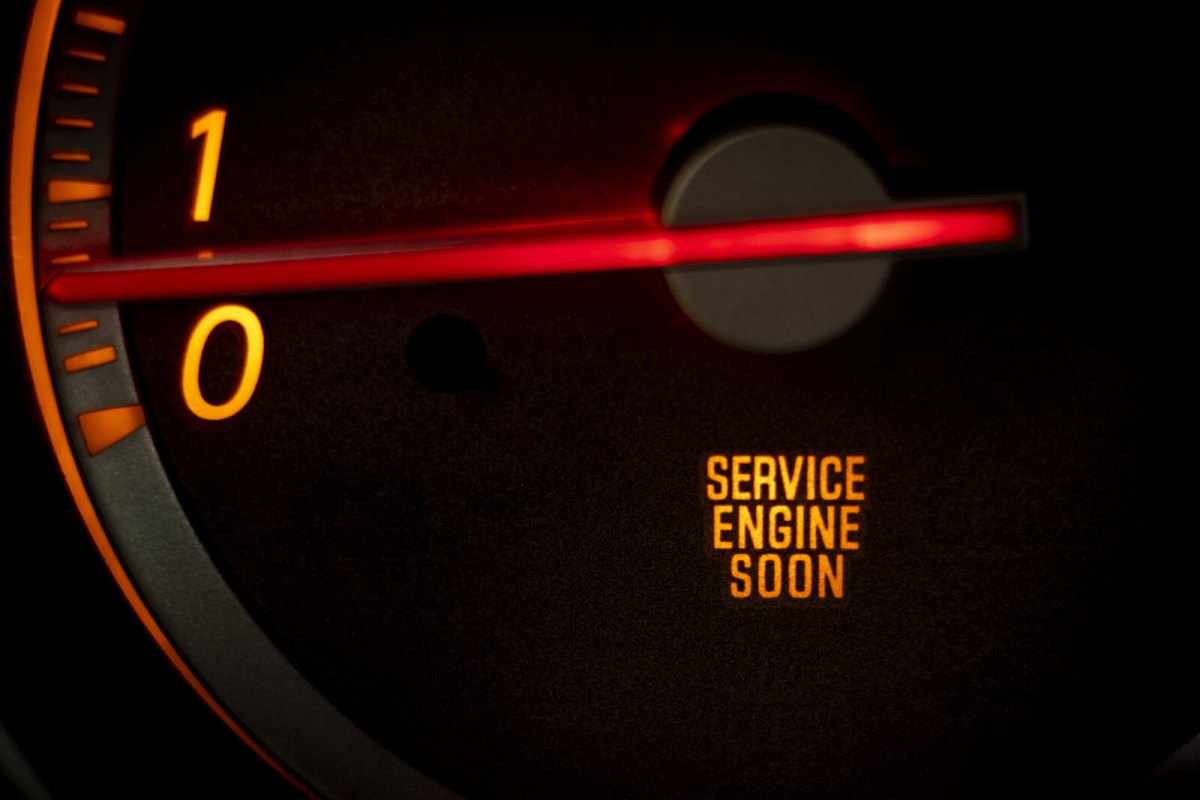
The “Check Engine” light is a car’s way of raising its hand to say, “Something’s off.” Sometimes it’s minor. Sometimes it’s your wallet’s worst day of the month (or year…). After two decades of working in and around cars, I can tell you the trouble codes behind that light aren’t random. After years of writing up estimates based on fault codes, I’ve noticed patterns that each tell a story.
Here are the check engine light codes my team saw most often, what they mean, and what usually fixes them
1. P0300–P0308: Misfire Detected
This family of codes means one or more cylinders are missing the mark during combustion.
The engine’s computer sees inconsistent firing and flags it. Causes range from worn spark plugs and failing ignition coils to clogged injectors or even cylinder compression issues.
When a misfire persists, you’ll feel it: rough idle, hesitation, or a flashing check engine light, which signals damage risk to the catalytic converter.
The fix is often to replace spark plugs or coils, clean or replace fuel injectors, and verify compression.
In any event, don’t keep driving with this one. It can snowball into something mighty more expensive than a new set of spark plugs.
2. P0420: Catalytic Converter Efficiency Below Threshold
Okay, this is probably the most common check engine light code to present without clear symptoms (at least at first).
The catalytic converter is supposed to scrub exhaust gases clean. P0420 means it’s not doing its job efficiently anymore.
Oxygen sensors measure exhaust gases before and after the converter; when both sensors start reading similarly, the system assumes the cat’s losing its edge.
Sometimes, the converter is fine but an oxygen sensor or small exhaust leak is fooling the computer.
Other times, the converter itself has failed from years of rich or lean operation. Always check fuel trims before condemning the cat. It’s an expensive part to replace unnecessarily.
3. P0171 and P0174: System Too Lean (Banks 1 and 2)
These codes indicate the engine’s getting too much air or not enough fuel.
You might notice hesitation, low power, or a long crank on startup. Typical culprits include vacuum leaks, weak fuel pumps, dirty or faulty Mass Air Flow (MAF) sensors, or cracked intake hoses.
To troubleshoot these codes, a mechanic might smoke-test the intake for leaks, clean or replace the MAF, and check fuel pressure.
Ignore this check engine light too long, and the motor runs hotter and less efficiently.
4. P0200–P0212: Fuel Injector Circuit Malfunction
These codes suggest one or more injectors aren’t firing electrically as commanded.
Wiring issues, corroded connectors, or a failed injector solenoid are common causes.
A tech would inspect wiring harnesses for chafing, test injector resistance, and verify power supply and ground integrity.
5. P0440 or P0446: EVAP System Leak or Vent Control Fault
The EVAP system keeps fuel vapors from escaping into the atmosphere.
These check engine light codes appear when the system detects a leak or a stuck vent valve. A loose or cracked gas cap can even set one off.
So, start with the gas cap. You might be surprised at the number of cars that came into the shop with a loose cap. Others had broken seals.
Tighten it or replace if the seal’s cracked. If that’s not it, a smoke test can find leaks in the lines or charcoal canister.
A check engine light doesn’t automatically mean a disaster, but it’s not a suggestion either
The code is just the headline. The story unfolds once a technician scans live data, checks for pattern failures, and interprets what the engine’s been trying to say. Ignoring it can turn a $200 repair into a $2,000 one. And in my experience, the driver’s wallet never wins the waiting game.