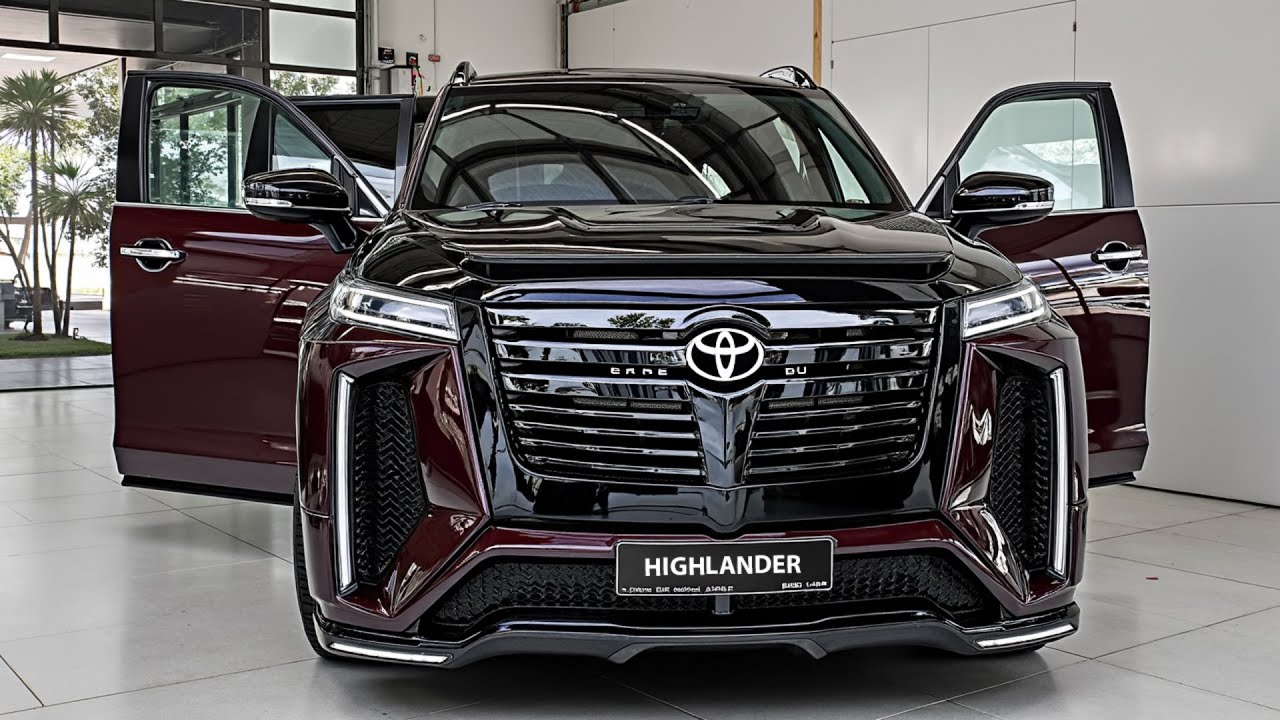
2026 Toyota Highlander – New Powertrains and More Cabin Room!
The 2026 Toyota Highlander continues its mission as a reliable, three-row family sport utility vehicle, now with major updates aimed at making it even more capable, practical, and efficient. Known for its long-term durability and consistent performance, the Highlander is expected to introduce a redesigned exterior and interior, better functionality, and important upgrades to safety and convenience features. Perhaps the biggest change for this new generation is the expected move to a hybrid-only lineup. That means gasoline-only options may no longer be available. In today’s shifting automotive landscape, Toyota is pushing efficiency without sacrificing family-friendly usability.
As for pricing, families considering the Highlander should plan for a starting price near forty-nine thousand dollars. That represents a noticeable increase compared to older gasoline-only models, but when comparing hybrid to hybrid, the jump is more reasonable. For example, the 2025 Highlander XLE Hybrid already starts at nearly forty-seven thousand five hundred dollars. With the shift to hybrid-only, Toyota seems committed to long-term fuel savings and lower emissions, which could balance out the higher starting cost over time.
Under the hood, the Highlander is expected to use the familiar 2.5-liter four-cylinder engine combined with electric motors to deliver around two hundred forty-three horsepower. This setup previously achieved an estimated thirty-five miles per gallon both in city and highway driving, making it one of the most efficient three-row sport utility vehicles available. For families who want more power, Toyota could also offer the more advanced Hybrid Max powertrain. Borrowed from the larger Grand Highlander, this system combines a turbocharged 2.4-liter engine with electric motors to deliver up to three hundred sixty-two horsepower. Although it offers less efficiency, with fuel economy around twenty-six miles per gallon in the city and twenty-seven miles per gallon on the highway, it brings quicker acceleration and better towing confidence.
Interior space remains one of the Highlander’s strong points. While it may not get much larger for 2026, there should still be excellent second-row legroom and plenty of usable cargo space. With the third row folded, drivers can expect around 48.4 cubic feet of storage, enough for road trips, sports gear, or bulk shopping. However, like many competitors in the segment, the third row is best suited for children due to its limited legroom.
Toyota will likely enhance interior comfort and usability with better screens and more functional technology. Expect a larger standard driver display and a central touchscreen that could be as large as 12.3 inches. Upper trims may receive an even more expansive screen similar to the 14.0-inch interface seen in Lexus vehicles. Wireless Apple CarPlay and Android Auto, premium audio, and a head-up display should all be available. Practical features like a hands-free liftgate, all-wheel drive, and enhanced towing capability will likely return as well.
Toyota is expected to officially reveal the 2026 Highlander by mid-2025, with availability following later in the year. Competing with vehicles like the Honda Pilot and Kia Telluride, the Highlander will continue to appeal to drivers looking for a durable, roomy, and fuel-efficient family sport utility vehicle built for the long haul.
Disclaimer:
The information in this video is based on topics that are being explored in various media. We also present illustrations that we generated from AI technology. The purpose of this video is to share the information we know. We sincerely hope you find our information useful.
#mvpauto #mvpauto #toyota
source