Cult cars. They had a certain power, like boxers in their prime, that drummed up the hype and had star-pulling power, but then would, more often than not, fade away into obscurity. You know what they say about the brightest stars burning the fastest, right? Well, here’s to the forgotten ones. The ones that some may still dream about, but many have forgotten. The ones that are still out there, somewhere.
From a 1990 Nissan Pulsar NX Sportback, ’90s pocket rockets, and a forgotten all-American Sportwagon to a Dodge Ram SRT-10 super truck, there’s enough variation to get those nostalgia receptors into overdrive. Here are some of the cult classics you haven’t thought of in years.
1990 Nissan Pulsar NX
Business in the Front. Party out back.

The car community loses its collective sanity over bread vans. Ferrari’s 1962 250 GT SWB ‘Breadvan’, BMW’s M Coupe, and Aston Martin’s DB5 Shooting Brake get all the fuss. What about Nissan and its third-generation Pulsar NX? A car that one day could be an everyday hero sports car, and then the next, the working man’s bread van. Why has the NX not received more flowers and hype? It’s that cool.

Loaded with party tricks like those futuristic taillights, frameless windows, pop-up headlights, and being one of the victims of the T-Top craze, what was there not to fall in love with? Modular cars couldn’t get cooler than the Pulsar NX, which made no sense commercially and likely leaked like a sieve —but who cares? It’s form over function with cult cars.
Notable Features And Specs
- T-Top Roof Design
- Removable rear screen to go from Sportback to Sportscar to light pickup
- Pop-up headlights, a five-speed manual transmission, and excellent fuel economy (23/30 mpg)
1989 Audi UR-Quattro
Born On The Rally Circuit

The short-wheelbase S1 is everywhere on the internet, but it’s the unsung hero of the Audi UR Quattro that many have forgotten. It’s the one that changed it all for the brand, providing a greater challenge in the rallying landscape after Lancia‘s dominance.

Even though four-wheel drive wasn’t new in motoring, the Audi UR Quattro was part of the craze,bringing homologation specials to the people during a time when rallying was incredibly popular. The blueprints of cars from that era, meant to compete on the world rally stage, were nothing short of ludicrous in the most visceral way. Dumb turbocharging with big boost, waste sounds, and pure analog engagement. We don’t see that happening much anymore.
Notable Features And Specs
- Legendary 20 valve DOHC Turbocharged inline-five producing 217 horsepower and 228 pound-feet torque
- Torsen rear differential, permanent Quattro all-wheel-drive
- The first car to effectively use all-wheel drive in the world rally championship
2000 Hummer H1
From Hauling Military Convoys To Hauling Families

No car did it for sheer brawn quite like the Hummer. The perfect result of when military surplus met suburban celebrity status and served one of the coolest cult followings the automotive world has borne witness to. The brand doesn’t quite carry the same presence as the original Granddaddy H1, but we should never forget who set the trend for rugged daily transport on the road that others like Mercedes‘ G-Wagon have followed.

Celebrities like Mike Tyson, LeBron James, and the goat himself, Arnold Schwarzenegger, all owned one at some or other stage. It was one of those cult cars that not only hit hard but occupied an exclusive space in the market. The H1 was more than a legendary car. It was an 8,114-pound force of nature, with aircraft-grade aluminum, a 6.6-liter turbocharged V8 diesel, and enough credentials to boast that it predated Greta Thunberg’s birth. It was the ultimate form of raw ICE coolness.
Notable Features And Specs
- The track width of the Hummer H1 is 86.5 inches, designed to follow behind tank tracks.
- Only 11,818 Hummer H1s were sold during a production run that spanned from 1992 to 2004.
- Greater off-road capability, such as inboard brakes, portal gears, and an above-engine-mounted radiator.

Underground Icons: 10 Uncelebrated Models That Changed Car Culture
We all know about the likes of the Porsche 911 and the Chevy Camaro and their impact on car culture, but do you know about these underground models?
1991 Honda CRX
Front-Wheel Drive Firecracker

From the era of pocket rockets, when the world was a lot less complicated and smaller, potent cars could take the fight to the big guys. Honda is no stranger to hot hatches, and the CRX symbolizes something of an original cult-following creator before the advent of the modern-day Type R.

I don’t care who you were before the Fast and Furious franchise; the Honda CRX was wooing the car community, and today, it is somewhat lost, with the odd example popping up here and there, fetching decent money. Before VTEC went mainstream, the CRX was there, laying the foundation, and became one of the first adopters of VTEC. Praise be.
Notable Features And Specs
- The CRX Si weighed only 2,174 pounds
- 108 horsepower from a 1.6-liter DOHC VTEC engine in Si trim
- Double wishbone suspension on every wheel
1986 Dodge Omni Shelby GLHS
Goes Like Hell.

Low production numbers and a badge that is synonymous with motoring greatness. Carol Shelby, that is, and who had a Midas touch that could turn anything into something special. The Dodge Omni GLHS was one of those examples. Coming with adjustable Koni shocks all around and a firecracker 2.2-liter turbocharged motor, which goes under the radar of hot hatch stardom, and frankly, it’s a shame. What’s not to like about a pint-sized pocket rocket to conjure up a serious cult following?

Producing 175 horsepower for a car that came out in 1986 and got to the 60 mph mark in 6.5 seconds was not messing about. Yes, there’s the obvious VW Golf/Rabbit resemblance, with Giorgetto Giugiaro’s folded-paper design influence, but who cares? As a matter of fact, the Omni Shelby GLHS was introduced to take on the Rabbit GTI.
Notable Features And Specs
- Fully adjustable KONI suspension and adjustable front sway bar, including rear sway bar
- It had a power-to-weight ratio of 0.069 hp/lb. A 1986 Ferrari Testarossa’s figures were 0.101hp/lb.
- 0-60 mph in 6.5 seconds
1980 Subaru Brat
Dodging Taxes And Raising Pulses

Arguably one of the strangest features on any car, the Subaru Brat had two rear-facing seats in the loading area. That was to avoid the 25 percent chicken tax levied on pickups, turning the Brat into a passenger vehicle to avoid it.

Four-wheel drive, the Brat was based on the Subaru Leone, and despite its oddity, it built a cult following and, judging by its selection as the next Gymkhana special driven by Travis Pastrana, expect a resurgence in popularity and a few more searches on Bring a Trailer.
Notable Features And Specs
- It had rear-facing jump seats to avoid an import tariff “chicken tax”
- Permanent all-wheel-drive
- It kept its spare tire under the hood in the engine bay.

This Forgotten Supercar Once Had The Fastest 0-60 Time In The World
This model, while only holding the 0-60 MPH record for a brief window, helped pioneer the American supercar scene.
1988 Toyota MR2
From The 80s With Attitude

The 80s era of design served up some of the coolest periods the world has witnessed, with sharp edges, boxy looks, and pop-up lights. Then there was an insistence by some brands to run the air intake grills on the side as an additional layer of sharpness (and function). The first-generation Toyota MR2 was a lucky victim of that, and we’re blessed for it.

Toyota has always had a knack for building cars for the tuners. Whether by conscious decision or happy accident, it generally plays out to be a good story, and while modern cars take the spotlight, the Mk1 MR2 served up quite the platform. Not just in the handling department, but in terms of the potential for further upgrades. What was there not to like? The real question is, why did we forget about this one?
Notable Features And Specs
- The MR2 stands for “Mid-Engined/Rear-engine/two-seater”
- Driver-focused car with near-perfect weight distribution (44:56 Front/Rear)
- The original engine was the 1.6-liter 4A-GE, a motor that was influenced by Ford’s iconic BDA engine
1992 Mazda MX-3
Back To The Future (On A Budget)

Mazda generally doesn’t get enough credit for all the work it’s done over the years. You can partly blame the niche rotary for stealing the show as well as the MX-5 Miata. The Mazda MX-3, however, was one of those models that attracted a very specific following, lending styling cues from the MX-6, which was itself a slick-looking machine. Of course, we can’t ignore the Porsche 924 influence on the rear windscreen.

The Mazda MX-3 was something of an enigma for its time. Sporting some futuristic technology for its time, like the 1.6-liter twin-cam V6, which had a variable resonance induction system, which essentially can vary the intake track of its intake manifold using two different intake ports, allowing for better power across the rev range and better fuel efficiency. Then there was the twin trapezoidal link rear suspension, which provided rear-wheel steering by self-regulating toe-in during turns, helping make the MX-3 rather nimble. The MX-3 GS achieved 0-60 mph in 8.4 seconds, which, for a compact hatch around that time, was certainly no slouch. It was also, just like its MX-5 cousin, rather upgradeable for tuners.
Notable Features And Specs
- Twin trapezoidal link rear suspension that allowed for rear wheel steering
- 0-60 mph in 8.4 seconds
- Had the world’s smallest production V6
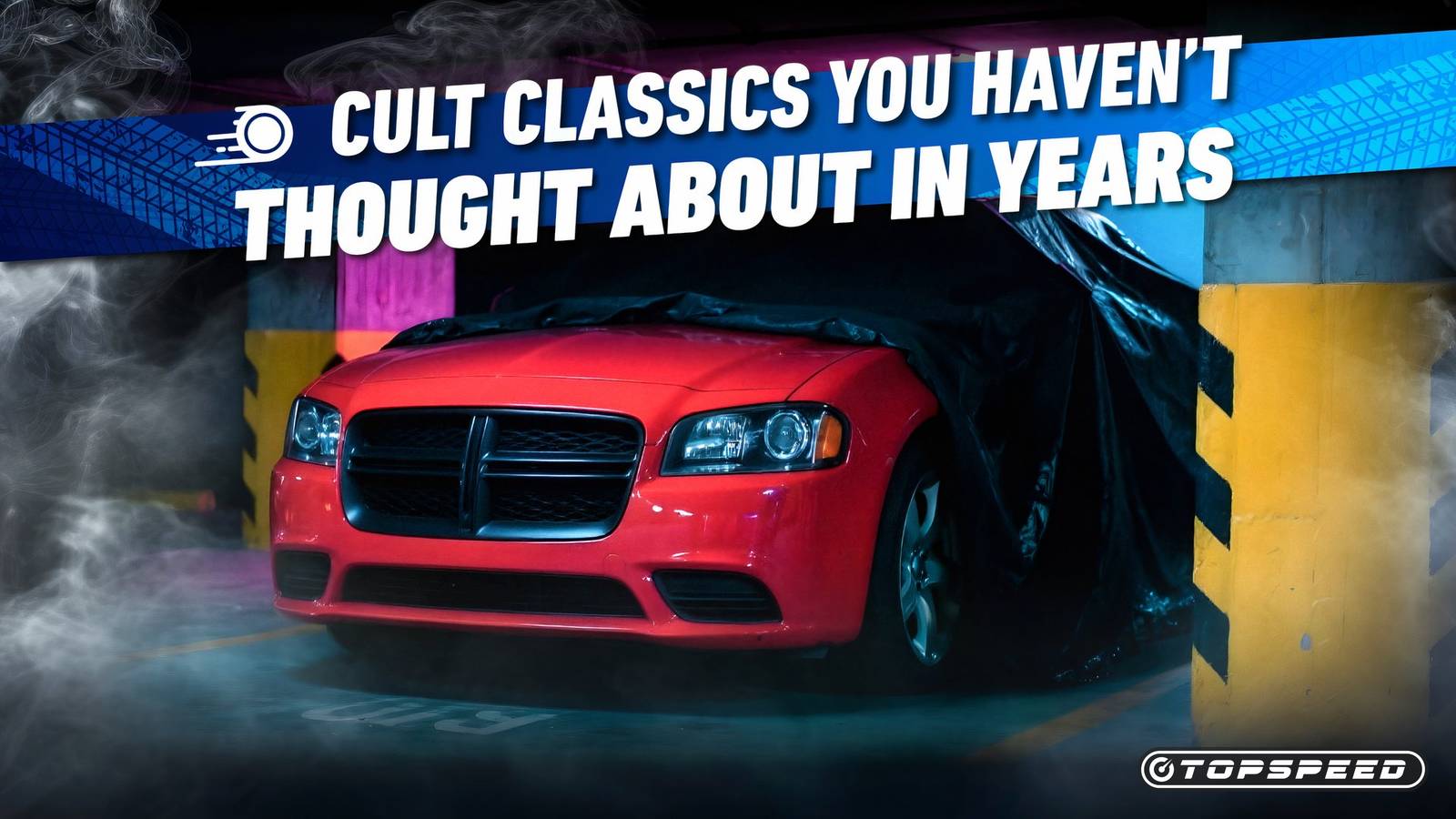
2007 Dodge Magnum
Your Bruiser Superwagon Needs Are Met

Who doesn’t appreciate a bruiser superwagon out there? They’re practical in every sense, can do just about everything an SUV can, and offer a reasonable trade-off between getting old gracefully and not losing that youthful yearning for performance. The world of performance wagons is a sticky one, with manufacturers making them over the years, everyone loving them, but not many end up buying them. Dodge’s Magnum, which lived out its final days before being discontinued in 2008, was one of these.

In true Dodge fashion, the Magnum received the “SRT” treatment with the release of the brutal SRT-8 which featured a 6.1-liter third-generation Hemi V8 that produced 425 horsepower and 420 pound-feet of torque. It could muscle its way to 60 mph in 5.1 seconds, and even though the Magnum failed to generate sufficient return for Dodge, resulting in its culling, the Magnum lives as a bit of a unicorn.
Notable Features And Specs
- 425 horsepower and 420 pound-feet of torque
- 0-60 mph in 5.1 seconds
- Drivetrain options include rear-wheel drive and all-wheel drive with a 62:38 rear wheel bias

16 Cheapest Supercars You Can Buy
Discover the ultimate combination of style, performance, and speed with our list of 16 relatively affordable supercars
2006 Dodge RAM SRT
You’d Better Strap Down Those 2x4s On The Home Depot Run

From the mad to the utterly absurd comes the Dodge Ram SRT, produced between 2004 and 2006, the product of ambitious boardroom decisions of yesteryear, and of decisions to shoehorn the 8.3-liter V10 of the Dodge Viper into a pickup. It came with a six-speed manual and could achieve a top speed of 154 mph.

The Dodge Ram SRT represents everything that was crazy about what could be in the automobile industry when bold ideas and imagination became reality, and we love them for it. Despite being a minor blip on the radar, the Dodge Ram SRT-10 was one of the all-time greatest American Pick-ups and, at one stage, the fastest pick-up on earth. All hail the mighty Ram.
Notable Features And Specs
- 500 horsepower and 525 pound-feet of torque
- 0-60 mph in 4.9 seconds
- Top Speed: 154 mph
Sources: Bring a Trailer, The EPA