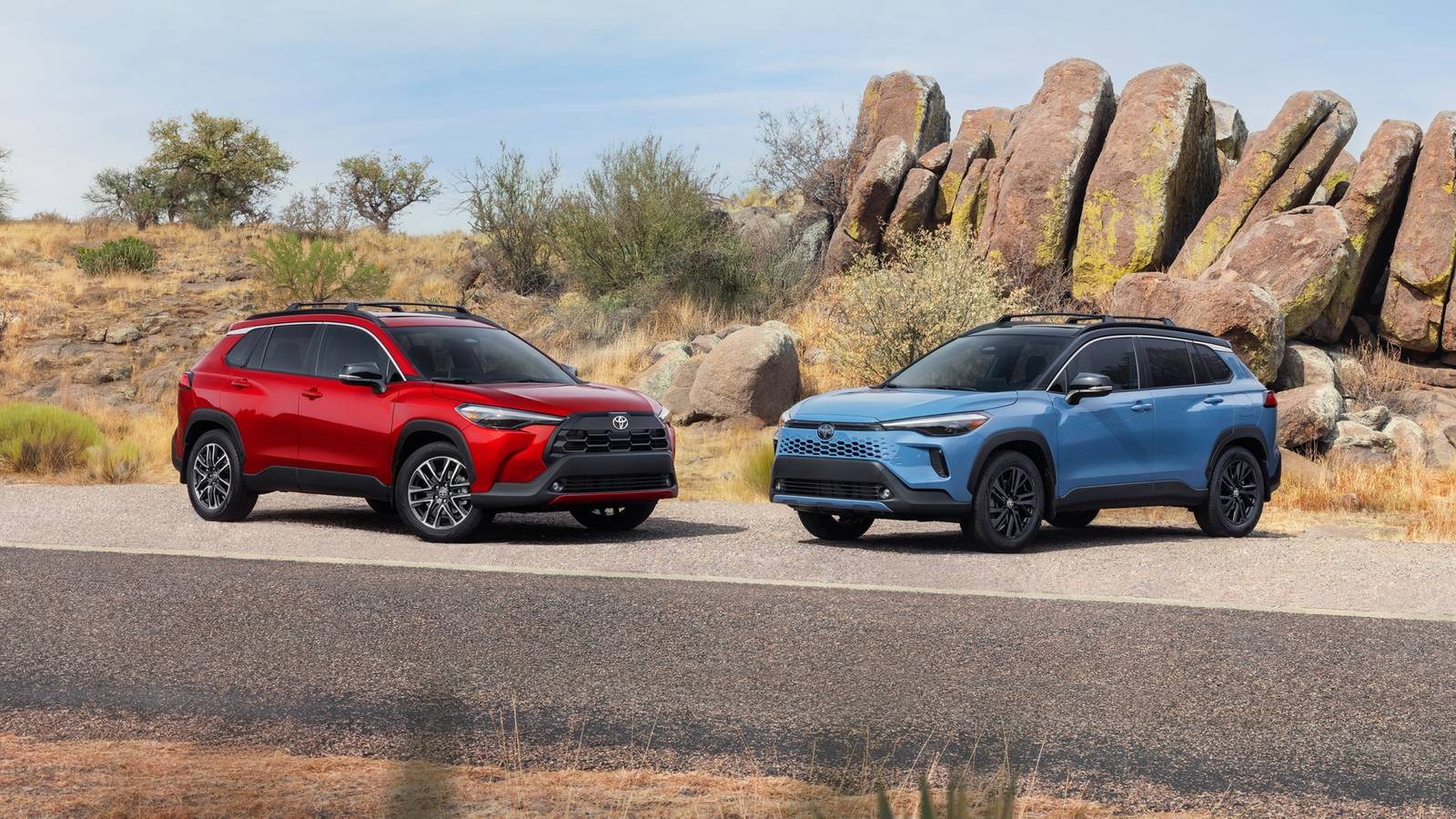
Toyota vehicles, whether they’re hybrid cars, sports cars, or pickup trucks, are so popular for good reasons. They are consistently among the most reliable models on the road, offering strong features, performance, and a strong resale value. Models like the Toyota Camry and the RAV4 often top the reliability charts. This stress-free ownership experience is what draws many buyers to the Japanese manufacturer.
But even Toyota isn’t completely immune to problems. Modern cars are packed with features, so many sensors, and complex powertrains, especially hybrids. Sometimes, these can malfunction or stop working entirely. Add to that the rising repair costs, and you’ll see why warranty coverage is so important today, even with a brand like Toyota. That’s why it’s essential to understand what kind of warranty you get with your new Toyota.

10 Hybrids That Make A Case For Toyota’s Bullet-Proof Reliability
Explore some of Toyota’s best hybrid models that demonstrate its iconic reliability.
Understanding Your New Toyota’s Warranty Protection

Toyota is known for producing some of the most reliable vehicles in the US, and part of that reputation comes from the brand’s warranty coverage. Now, it’s by no means as long as Hyundai’s industry-leading protection. Toyota offers a more traditional type of manufacturer warranty that covers defects in materials or quality for 3 years or 36,000 miles, whichever comes first. This is your basic bumper-to-bumper warranty.

This is backed by a range of other protections, including a 5-year/60,000-mile powertrain warranty, a 5-year/unlimited-mile rust-perforation warranty, and emission-related coverage. Every new Toyota also benefits from ToyotaCare, which includes no-cost maintenance and roadside assistance (RSA). For those who want more extended protection, Toyota offers the optional Vehicle Service Agreement (VSA) that can extend your vehicle’s warranty coverage to up to 10 years/125,000 miles.
Limited Warranty Coverage
|
What’s Covered |
What’s Not Covered |
|---|---|
|
|
Some Things To Note

Before diving deeper into Toyota’s manufacturer warranty details, there are a few things you should know. Toyota’s warranty does not cover wear-and-tear items, cosmetic issues, or any damage caused by misuse, accidents, or non-Toyota mods. Warranty coverage is also subject to terms and conditions and may vary by model, trim level, and optional equipment. So, it’s always a good idea to refer to your new Toyota’s Warranty and Maintenance Guide for additional information.

Here’s How Much It Costs To Replace A Toyota EV Battery In 2025
Expect to spend a fair fee on a new battery for your bZ4x.
Basic Coverage Protects Your Vehicle For 3 Years/36,000 Miles

When it comes to protecting your new Toyota vehicle, Toyota has you covered with a 3-year/36,000-mile limited warranty. This warranty protects you against defects in the vehicle’s materials or quality. This bumper-to-bumper warranty covers a vast range of components on your vehicle, which could otherwise be expensive to replace early in its life. It does not, however, include consumables or maintenance items such as brake pads, wiper blades, filters, and fluids.
Powertrain Warranty Protects The Vehicle’s Vitals

In addition to the limited warranty, every new Toyota comes with powertrain coverage for 5 years/60,000 miles, whichever comes first. This warranty protects the critical components of the vehicles, including engine, transmission, transaxle, and front-wheel and rear-wheel drive systems, as well as seatbelts and airbags. So, if any of these components fail while under warranty, you don’t have to spend your money on repair bills, which can usually be exorbitant for powertrain parts.
Rust-Through Coverage And Emissions Coverage Are There, Too

If you live in snowy or coastal regions, you don’t have to worry about rust, either. Toyota has you covered with a rust-through warranty for 5 years/unlimited miles. This means that the manufacturer will repair or replace any sheet metal that has rust perforations; it still does not cover rust caused by accidents, misuse, or modifications. Then there’s the emissions’ coverage under California or Federal regulations. Refer to your vehicle’s Warranty and Maintenance Guide for details on Toyota’s emissions coverage.

Kia’s Famous Warranty Isn’t What You Think
Kia’s warranty has been a major part of the brand’s value proposition, but is it really as good as it seems?
Hybrid Vehicles Also Benefit From A Similar Warranty Coverage

Warranty can become even more important with hybrid vehicles. That’s less about their reliability and more about the hybrid powertrain’s complexity, which can make repairs quite expensive. Then there’s the cost of batteries, which can burn a big hole in your wallet if something goes wrong. Fortunately, Toyota has you covered with a strong warranty that covers both hybrid system components and the HV battery.
Hybrid System Component Coverage Of 8 Years/100,000 Miles

Like ICE Toyota vehicles, the hybrid models also get 5 years/60,000 miles of powertrain coverage. Toyota adds to that with a strong hybrid-related component coverage for 8 years/100,000 miles, whichever comes first. This warranty protects major EV drive components, such as the battery control module, inverter with converter, and transaxle components. Toyota assures that the coverage still applies if the traction battery drops below 70 percent of the original capacity.
Longer Hybrid Battery Warranty For 10 Years/150,000 Miles

Because hybrid battery repairs are pretty expensive, Toyota has expanded coverage for the hybrid battery to all 2020+ model years. The hybrid battery is now covered for 10 years/150,000 miles, up from the previous 8-year/100,000-mile warranty. This should give owners long-term peace of mind that they don’t have to splurge on the expensive battery anytime soon. Do note that the hybrid battery warranty may be longer under the Emissions Coverage.

The Real-World Costs To Replace A Toyota Hybrid Battery
Replacing the battery on your Hybrid Toyota is nowhere near as expensive as you would have thought.
You Can Extend The Warranty With Vehicle Service Agreement (VSA)

Owners who intend to keep their cars for longer durations can also opt for Toyota’s extended service packages with Vehicle Service Agreement (VSA). This is an optional, Toyota-backed protection plan that covers the cost of unexpected repairs even after the vehicle’s factory warranty has expired. Toyota offers VSA in three terms: Powertrain Protection, Gold Protection, and Platinum Protection. Each plan provides towing reimbursement, rental car assistance, and roadside assistance.
VSA Plans Explained

The VSA starts with the base Powertrain Protection, which covers components like engine, transmission, and axle for 6 years/100,000 miles. It’s ideal for owners who want basic protection that will keep their vehicles running for years to come. Gold Protection steps it up by covering more repairs and parts, like electrical components, for 3 years/50,000 miles to 8 years/125,000 miles. The Gold Protection plan offers the highest level of service agreement protection, covering most electrical and mechanical components, including engine, transmission, and air conditioning. The term for this plan ranges from 3 years/50,000 miles to 10 years/125,000 miles.

The Shocking Secret About The Aftermarket Warranty Industry
If there’s one thing this Reddit post reveals, it’s that the warranty industry is far more lucrative than expected.
Toyota Has You Covered With Maintenance And Roadside Assistance, Too

In addition to the basic and extended warranties, Toyota also offers several additional benefits with each new Toyota vehicle. This includes Accessories Warranty, which covers up to 3 years/36,000 miles, which is the same as the Toyota New Vehicle Limited Warranty. Another benefit is ToyotaCare, a no-cost maintenance plan with Roadside Assistance, which can be upgraded to ToyotaCare Plus for more extended protection. These come as standard with all Toyota cars, and here’s more on them.
Accessories Warranty For Up To 3 Years

Accessories Warranty covers the Toyota accessories you add to the car. For accessories purchased at the time of the vehicle’s purchase, the warranty covers them for 3 years/36,000 miles from the vehicle’s in-service date. For accessories purchased after the new vehicle purchase, the warranty applies for 12 months, regardless of mileage. Do note that this warranty does not cover aftermarket accessories or modifications you may add to your vehicle. While a mostly 12-month coverage period may not sound like much, it is in line with industry standards.
ToyotaCare For Up To 2 Years (On Most Models)

ToyotaCare is a no-cost maintenance plan that comes with every new Toyota. This plan helps keep your car up to date and well-maintained with no additional cost. For most Toyotas, this coverage applies for 2 years/25,000 miles, except the Mirai, which has 3 years/35,000 miles coverage. The plan covers standard factory-scheduled services, including engine and oil filter changes, tire rotation, multipoint inspection, fluid adjustments, and OEM parts.

If you want more extended protection, you can even opt for ToyotaCare Plus, an optional agreement that extends the protection up to 5 years/75,000 miles from the date of first use. Toyota also offers shorter plans of 3 or 4 years. Your vehicle must have 31,000 miles or less and be within 37 months of its first use to qualify for this plan. For some models, like Mirai, bZ4X, GR Supra, and GR86, Toyota recommends contacting the dealer for more information on maintenance plans.
Roadside Assistance For Two Years

With warranties and ToyotaCare, new Toyota models include 24/7 roadside assistance (RSA) for 2 years, regardless of mileage. This applies to all models except Mirai, bZ, bZ4X, Prius, and Prius Prime, which get an RSA benefit of 3 years/unlimited mileage. The RSA includes emergency jobs such as battery jump starts, towing, tire service, emergency fuel delivery, lockout protection, and winching. With everything combined, Toyota promises a stress-free ownership experience with a new car, which, of course, is backed by its solid reputation for reliability.
Source: Toyota