There are all sorts of wings out there – chicken wings, Buffalo wings which are actually still chicken wings, and then, there are sports bike wings. You find them on all sorts of motorcycles nowadays, be it entry-level, middleweight, or full-spec flagships. However, the big question across the board is this: are they actually good for you or just high-octane junk food? Let’s break down what winglets really do, when they work, when they don’t, and whether you should even bother. And finally, do entry-level bikes need them?
To give you the most up-to-date and accurate information possible, the data used to compile this article was sourced from my experience as a Big Four (Yamaha, Honda, Kawasaki, Suzuki) plus Harley-Davidson certified mechanic.
How Winglets Work (When They Do)
Most are style over substance

Wings, or winglets if you prefer, act exactly like an airplane’s wings, only inverted. They are mounted with the foil-shape upside down so that the “lift” generated by them doesn’t lift up, but instead pushes the front end down to help keep the front wheel planted at speed. When successful, this improves stability, cornering grip, and reduces front-end lift under hard acceleration.
Unfortunately, for many winged bikes out there, their little flappers are more of a fashion accessory than a functional feature. Riders chasing their bike’s maximum potential might be tempted to try some aftermarket winglets with mixed results, mostly bad to be honest. Winglets need specific conditions to work efficiently, or even at all for that matter, and the best examples are part of the stock equipment on high-performance bikes that come wind-tunnel tested and all that jazz.
There’s always a catch, though. As with any foil shape, the wings also generate drag. Little vortices form at the wing tips, so the best of them will have a set of enclosed foils that connect up through a vertical member that prevents the formation of the vortex. Other high-quality winglets might be singled up, but with tiny winglets of their own at the tips that interrupt the vortex and provide low-drag performance.
The Good, The Bad, And The TikTok

At the bottom end of the price range, most aftermarket winglets are lick ’em-stick ’em injection-molded plastic that are all-show-and-no-go, but make for nice Tik-Tok clips and might boost your e-peen a little with folks that don’t actually know better. At the top-end, they’re carbon-fiber, wind-tunnel optimized, and integrated into the bodywork on bikes built to go really, really fast. If we’re being completely honest, this really is a racing implement with little to no real benefit away from the track. Under ideal conditions, they don’t do very much until you’re over the 75 MPH mark, and don’t reach peak effectiveness until you get over the 100 MPH mark.
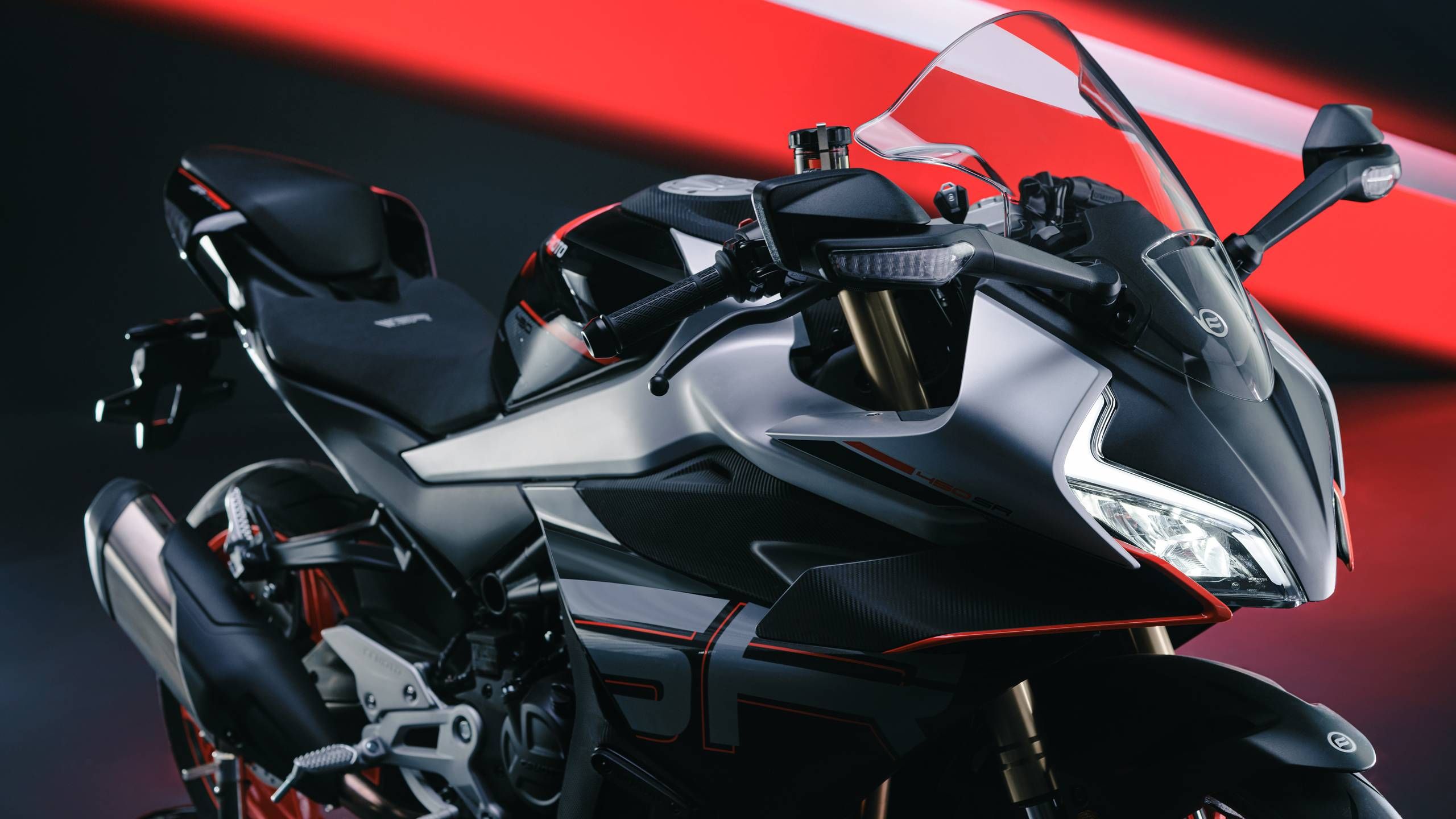
When you’re out and about, even if you’re on the U.S. interstate system, you shouldn’t be going fast enough to properly avail yourself of its best benefits, even if your entry-level sport bike can maintain those speeds. Even factory-fitted wings like those on the CFMOTO 450SR/SS, Aprilia RS 660 Trofeo, or MV Agusta F3 RR only start paying off when conditions are right. On bikes like the 2025 Yamaha R3 or KTM RC 390 GP, there’s potential at the racetrack, but their limited top speeds still keep those gains modest.
The best wings work in harmony with the fairing and windscreen shape to supplement the forces generated by them when in motion. They will generate a minimum of drag with no vortices and provide stability in the corners as well as when braking if you can go fast enough to see that benefit. The foil shapes used need relatively high speeds to start doing any sort of meaningful work, so they don’t necessarily work very well on small-displacement/ slower bikes, and any benefit garnered will probably be lost on a newer rider anyway.
When Wings Hurt More Than Help
Could just be stylish little air brakes

Wings can be worse than useless, as it turns out. Poorly designed or non-integrated wings can generate drag, which is the opposite of what you thought they would do. This actually impedes acceleration and reduces top-end speed with no apparent benefits other than just looking cool and serving as a conversation piece. The bottom line is this. If your motorcycle wasn’t designed to use wings from the start and wasn’t built to go really fast, the chances are high that those e-peen boosters are just stylish little air brakes.
So What Can You Do for Real Performance?
Rider skill is still your best bet

Let’s say you want to improve performance in some meaningful way, but as we’ve discovered, the typical winglet setup won’t do it for you. Let’s look at what you could do.
- Take a hard look at your riding position. If you’re not tucking in nice and tight, you’re creating a significant amount of drag.
- Check out a double-bubble windscreen. These reduce turbulence, which, in turn, improves top speed.
- Invest in good tires such as Michelin Pilot Street or Diablo Rosso III for improved street performance. Maintain proper tire pressure to reduce rolling resistance.
- Pay attention to what you’re wearing. Anything that’s flapping is creating drag. Get yourself a snug-fit textile riding jacket. You’ll look like you’re serious about riding and probably be more comfortable, too.
- Keep your fairings clean and waxed. This improves laminar airflow, even if just a little, but everything you do to reduce drag and reduce resistance adds up.
At the end of the day, winglets can be functional tools that significantly improve stability, but on entry-level sportbikes, you’re likely not going to satisfy the conditions to hit that sweet spot. Unless you’re spending a lot of time running at triple-digit speeds, your best bet for improved performance is still rider skill.