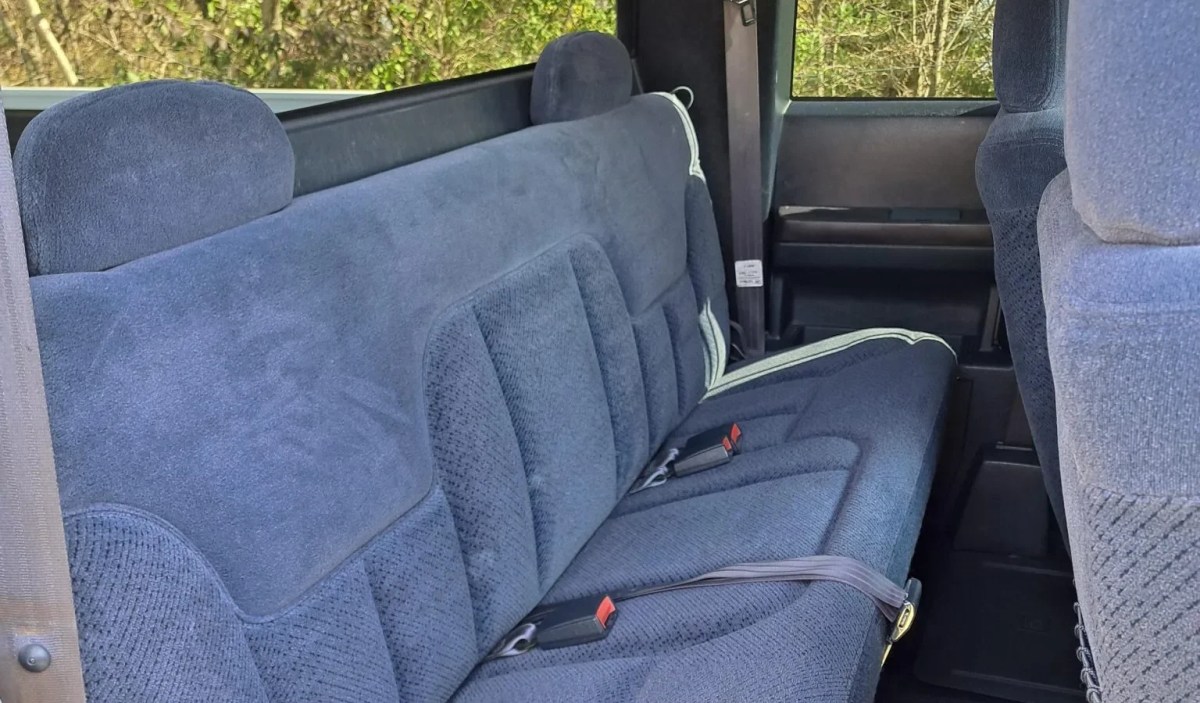

It wasn’t a flashy courtroom battle, and it didn’t revolve around cutting-edge technology. Instead, it hinged on a piece of safety gear most people rarely think twice about: the rear-center lap belt. After five years of litigation and a potential $73 million payout on the line, a Las Vegas jury sided with GM, determining the 2-point belt used in a 1998 Chevy truck wasn’t defective and didn’t require a warning label.
The GM case stemmed from an August 2018 crash
It happened around 1:50 a.m. The truck, identified in court only as a “1998 Chevrolet,” slammed into both a tree and a boulder.
Allie Mead, seated in the rear center position and secured only by a lap belt, suffered severe injuries.
She claimed the belt’s “negligent and improper design” caused those injuries and argued they likely wouldn’t have occurred if she’d been restrained by a modern 3-point system, the type that includes a shoulder belt.
It’s easy to see both sides
Lap belts have a long track record of protecting occupants from ejection, especially in older trucks designed under different safety expectations.
But injury patterns from lap belts often involve concentrated force across the abdomen or pelvis.
For decades, safety researchers have warned about spinal and internal trauma linked to those designs. It’s partly why the industry moved to three-point restraints in nearly all seating positions.
GM countered that the vehicle met or exceeded all federal requirements when it was built and sold
Regulations didn’t require a shoulder belt in the rear center position at the time. The automaker also argued that injury alone doesn’t indicate defect.
In its view, the belt redistributed crash energy as intended and helped prevent a worse outcome. GM maintained it wasn’t “unreasonably dangerous” and didn’t warrant additional warnings, CarComplaints.com reported.
The jury agreed.
Cases like this make automakers nervous because juries sometimes judge designs by modern expectations rather than historical standards
Lawyers referenced other recent rulings where Ford faced massive verdicts over truck roofs despite meeting federal benchmarks. In this instance, though, the court didn’t reinterpret the regulator’s role.
Rear-seat safety remains a complicated subject. Today’s vehicles routinely include three-point belts across all positions, and for good reason. But older models still on the road reflect past rules, and legal responsibility often runs through that timeline rather than current best practices.
You might say the same is true for airbag standards. Drive a vintage or classic car, and you can expect far fewer safety features, including modern airbag design and placement.
In the end, GM avoided a costly loss. The verdict closes a surely painful chapter for Mead, whose life changed that night in 2018. It also reopens a quiet conversation about whether drivers really want to risk their lives by keeping an old car on the road.