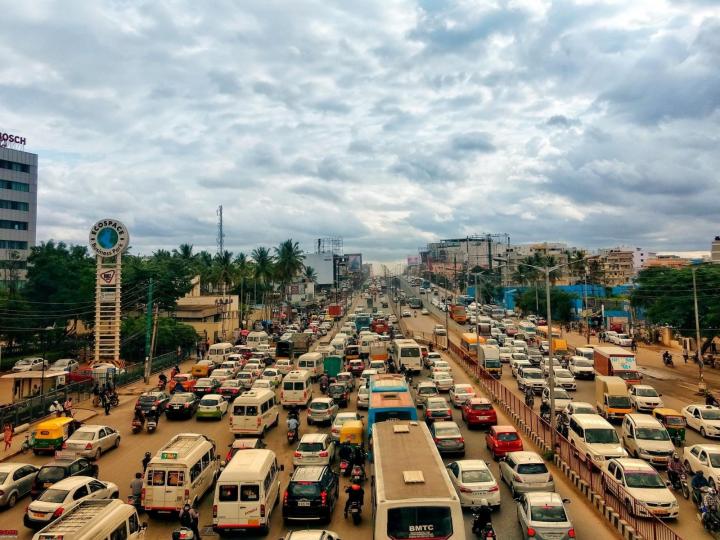
BHPian dsmk1025 recently shared this with other enthusiasts: Hi team, We have been seeing an increase in car and bike purchases in our country recently, especially after the pandemic. Now this is good for the GDP and all other aspects of growth, the area of concern is – can our roads take that growth? The answer seem to be a NO. I have been recently observing an increase of traffic and more jams in the busiest routes. This has been causing an increase in the travel time with most time being lost in traffic jams. The drives which took 30 mins once, are now taking more than an hour. This increase of vehicle movement combined with the deteriorating condition of roads is consuming a considerable amount of energy and time from the travelers. Amidst all this chaos, I asked myself a question: How to overcome this problem? We all know that our country is the most populated one on the earth. Our cities have a huge population density. For reference Mumbai has a population density of ~28000 people per square kilometer. Other major cities have >10000/sqkm. Similar to our cities, European cities are also densly packed. For reference, Paris has population density of ~21000, Barcelona has ~17000. But they don’t have any of the traffic problems like us and have a very clean air too. So, what is the difference? After doing some deep dive, I discovered a few points. After World War II, during the reconstruction of their cities, European designers decided to solve the traffic problems that were existing before the war. They opted for people first approach rather than the car first approach like US. They created dedicated people only lanes with no entry for cars and allowed only cycles, skate boards or other form of human powered street vehicles. The other major thing they focused on is a solid Bus transport system. Some have dedicated bus lanes and others went with the full blown BRT systems. To greatly increase last mile connectivity from bus stops, they have dedicated and protected Footpaths. Some even have dedicated Cycle lanes, with Amsterdam being the top bike-friendly city. Some buses and metros even allow foldable or regular cycles along with passengers like skateboards. So finally they have the complete end to end safe connectivity with dedicated walking spaces taking them to the bus stops, reliable bus services taking them to their destinations and again cycles or footpaths taking them to the door steps safely, comfortably and efficiently while not tiring the people. Some even make use of their time in buses and metros by working. There are many such good end to end systems around the world where population density is similar to us. So, I thought instead of adding more lanes to the roads, why can’t we add dedicated bus lanes in heavy usage corridors and have safe walking spaces. With a good end to end connectivity, many people like me, whose daily travel is pre defined will preferably choose public transport system right? Of course we do have metros in many cities with many more upcoming systems. But the missing link is the last mile connectivity. So with all my inexperienced thoughts I think, a good and reliable bus service with dedicated lanes in high mobility corridors, combined with the safe footpaths should probably de congest our cities. To all my BHPians, what are your thoughts on this? Do you think this is feasible and enforceable? Sorry for any mistakes. Experts, please do shed some light on this issue. Here’s what BHPian sushantr5 contributed to the discussion:According to my opinion, last mile connectivity is walking. Unless we have walking friendly infrastructure majority will not select public transport as a preferred way of travel in the city. Indians have forgotten walking, slowly we are turning into unhealthy population. We do not prefer to walk and hence the usage of personal vehicles. People takeout 2 wheelers even for small activities like, nearby shopping, taking kids to school and all other activities which can be done in 1 km radius. Result we see too many two wheelers, which also tend to drive wrong sides to cut distance. This also gave rise to Rapido like ride hailing apps because people do not want to walk. I for once decided to use Pune Metro to travel to Swargate bus stop. When I got down on Swargate metro station, then to cross the road I have to cross high traffic road and jump 3 feet high divider to reach state bus transport depot across the street. There is a underpass under construction and for some reason it is being delayed as it received lesser priority. For next time I chose ola for the same activity. We need to make our neighbourhood walking friendly and that is the way we can improve traffic situation. If people can walk, then they will walk to the bus stop, increased people at bus stop will force increased public transport. Walking will reduce lot of local vehicle usage and hence in general less vehicles on road. This will in turn improve traffic situation on the roads.Meanwhile, BHPian dass said this regarding the matter:Few things that come to mind 1. Increase public transport frequency 2. Reduce the cost of public transport – Bangalore Metro increased fares astronomically this year and the traffic on road increased almost immediately. 3. Improve last mile connectivity. Share autos work, however are not allowed here. 4. Make footpaths exclusive for people to walk, remove all obstructions and penalize footpath riders to an extent that they are scared of even thinking of that as an option. 5. Eliminate parking on busy roads and by lanes. If people do not have parking space inside their homes, they need to be fined heavily for parking on public roads. Most footpaths in older areas are lined by cars parked on them and forcing people to walk on the roads, justling for space with other vehicles, which automatically reduces the speed of those vehicles, while creating an unsafe atmosphere for the pedestrians.Check out BHPian comments for more insights and information.
Source link
Increasing traffic in major Indian cities: How do we tackle it?