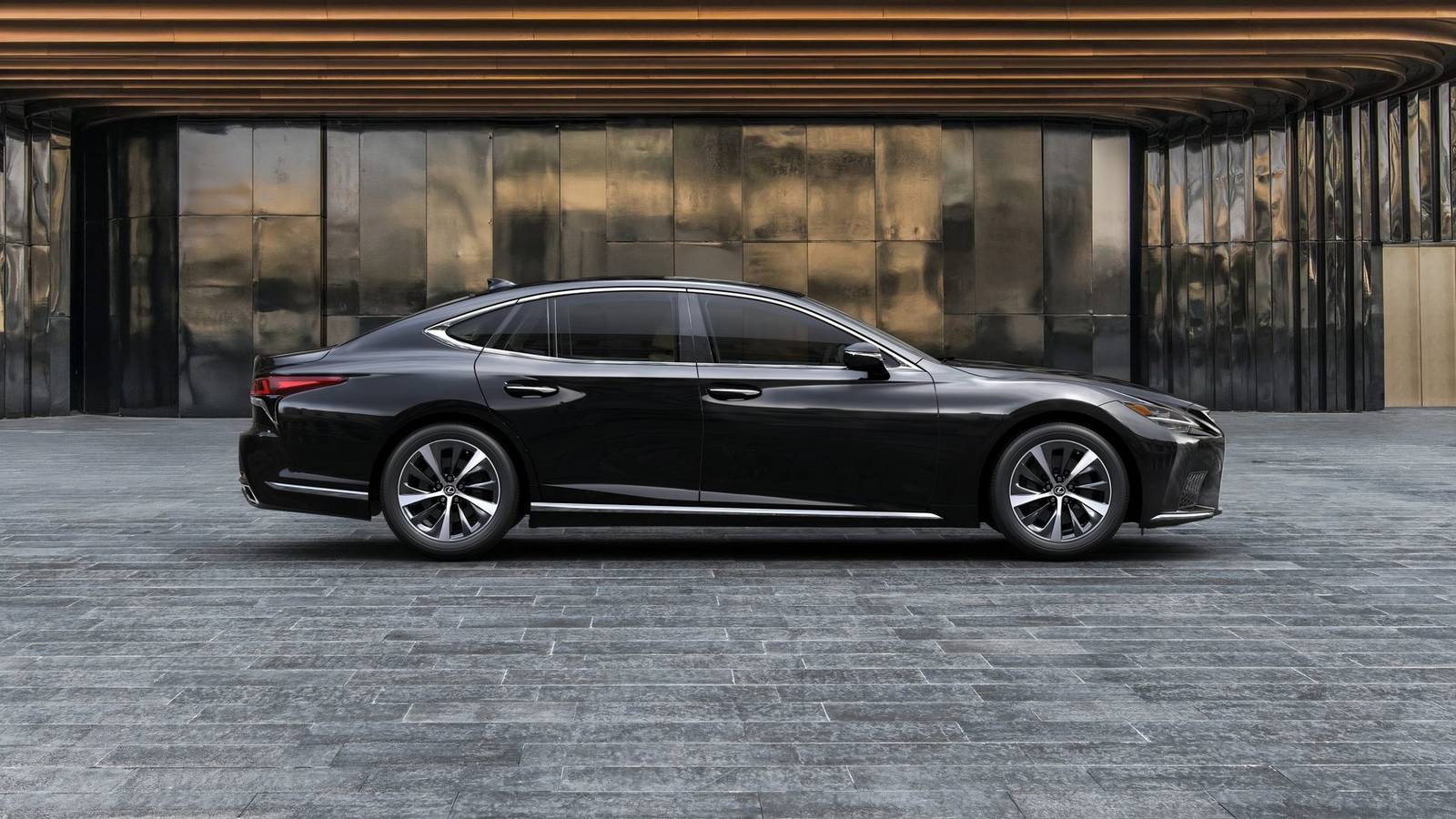
Hybrid cars traditionally struggle with bad depreciation rates when compared to their ICE counterparts, but in recent years, we’ve been noticing these models benefit from better value retention rates, thanks to better reliability and improved familiarity with American consumers. The rise in fuel costs is also making these more efficient models in-demand commodities. New hybrid car prices have been increasing at a steady rate, but a lot of options currently listed across multiple brand catalogs have evolved into relatively inaccessible options, even when looking at entry-level monikers.


- Base Trim Engine
-
3.5L V6 Hybrid
- Base Trim Transmission
-
Continuously Variable Automatic (CVT)
- Base Trim Drivetrain
-
All-Wheel Drive
- Base Trim Horsepower
-
354 hp
- Base Trim Torque
-
257 lb-ft @ 4900 rpm
- Fuel Economy
-
22/29 MPG
- Make
-
Lexus
- Model
-
LS Hybrid
- Segment
-
Full-Size Luxury Sedan
The now defunct Lexus LS 500h hybrid is one example of a luxury gasoline-electric sedan that has suffered from considerably poor value retention rates, resulting in lightly used models becoming unbelievable bargains. It’s worth noting that a two-to-three-year-old model remains a fairly costly proposition, but compared to what they cost when new, these are very competitively priced options that offer an impressive balance of performance and efficiency, without sacrificing quality, a comprehensive standard specification, and near-unrivaled comfort levels.
To provide the most accurate and up-to-date information, this article uses data sourced from various manufacturers and trusted sources.
The Lexus LS Hybrid Is A Used-Buyer’s Dream

A 2023 Lexus LS 500h is likely to cost you anywhere between $64,696 and $78,662, with J.D. Power highlighting that most models are selling for $71,550. Granted, this is a tall price to pay for a vehicle, but this was a $113,485 luxury sedan when new, just shy of two years ago. Luxury sedans typically struggle with holding their value. Throwing a hybrid drivetrain into the mix doesn’t really help its cause.
iSeeCars indicates that this model will go on to lose an additional 50.3 percent or $57,991 of its value over the next five years, which would bring its price down to what you’d pay for a new Toyota Camry. Edmunds indicates that this model will cost you $84,481 to own over five years and 60,000 miles, $33,549 of which accounts for depreciation, $8,796 for maintenance, $2,155 for repairs, and $11,500 for fuel. CarEdge indicates that the same model will cost you $109,608 over the same period. $60,611 of this accounts for depreciation, $8,885 for fuel, and $2,635 for maintenance.
A Truly Underrated Luxury Sedan

The motivation for Lexus pulling the plug on the LS hybrid in the American market is due to its incredibly low sales performance. In its final sales year, the Japanese brand confirms that it only sold 94 individual copies and 107 throughout 2023. This is even less than the highly niche and far less practical Toyota Mirai. The primary reason for this is that the premium over the ICE model just didn’t justify the improvement in performance and efficiency.
Having said that, there really aren’t that many consumer reviews for us to go by to give you a clear idea of how well-received it is. However, a lot of its specifications fall in line with the ICE model, which has received a lot of positive comments from existing owners. The 2023 model year currently sits with a 4.1/5-star owner review score, with 55 percent of the 49 reviews being a full five-star rating.
Noteworthy strengths include a high-quality and well-appointed interior, impressive comfort levels, and exceptional reliability and build quality. Noteworthy downsides include a fussy infotainment system and an evidently poor value retention performance.
A Hybrid Business-Class Lounge On The Go

Lexus only sold the LS 500h in one set specification, with a comprehensive standard features list. This includes a 24-inch integrated heads-up display, the 23-speaker Mark Levinson surround sound audio system, wireless Apple CarPlay and Android Auto, and a wireless smartphone charger. Additional standard features include:
- Heated leather-trimmed steering wheel with paddle shifters
- 16-way power-adjustable heated and ventilated front seats
- Electrochromic auto-dimming inside and outside mirrors with puddle lamps
- Dual-zone climate control
- Power rear sunshade and power moonroof
The highlight of the LS hybrid’s standard packaging is the Lexus Safety System+ 2.5 suite, which includes a blind spot monitor with rear cross-traffic alert and parking assist with auto braking. The cabin also benefits from a 10 airbag configuration in the event of a collision.
354 Horsepower At Your Disposal

The Lexus LS 500h features an identical drivetrain to the LC 500h, which has also been brought to an end because of an equally poor sales performance. This drivetrain consists of a 3.5-liter V-6 with two electric motors that transfer a combined 354 horsepower to the rear wheels via the Lexus Multistage Hybrid Drive eCVT, in conjunction with a four-speed automatic torque converter with 10 integrated synthetic gear steps.
2023 Lexus LS 500h Specifications
25 MPG On The Combined Cycle

According to the EPA, the Lexus LS 500h doesn’t quite match up to the rest of the Toyota hybrid catalog in terms of efficiency, but in the context of a performance HEV, it’s not all too bad at all. The agency indicates that you can expect to enjoy a 22/29/25 MPG consumption on its city/highway/combined cycle, while the 22.2-gallon tank and 1.1-kWh battery will cover you for 555 miles in-between refuels. Based on this, you can expect to spend $4,000 more on fuel over five years compared to the average new vehicle sold in the U.S. You can also expect to spend $2,400 on gasoline every year, $3.98 to drive 25 miles, and about $88 to fill the tank.
2025 Lexus LC Hybrid Fuel Efficiency Specs
| Consumption (City/Highway/Combined) | 22/29/25 MPG |
| Range | 555 Miles |
| Five-Year Spending | $4,000 |
| Average Fuel Cost | $2,400 |
| Cost To Drive 25 Miles | $3.98 |
| Cost To Fill Tank (22.2 Gallons) | $88 |
The LS 500h’s unique Multistage Hybrid system combines a traditional hybrid continuously variable transmission with a four-speed automatic transmission, with the goal of creating a driving experience closer to a performance car than a conventional hybrid. Instead of relying solely on an eCVT, Lexus adds a physical four-speed torque converter behind it. The eCVT manages power blending between the engine and electric motors, while the automatic transmission multiplies the available ratios, effectively giving the system ten distinct gear steps.
This design reduces the rubber band feel common in hybrids and ensures sharper, more direct acceleration with smoother power delivery. The result is a strong low-end torque range, efficient highway cruising, and greater driver engagement, making it feel more like a conventional luxury sedan than a traditional hybrid.
Factors Contributing To The LS Hybrid’s Poor Depreciation

The Lexus LS 500h suffers steep depreciation in the U.S. because it doesn’t possess attractive long-term structural and market trends. If anything, it is a product that combines a series of traits that directly contribute to a poor value retention proposition. The full-size luxury sedan market has already been suffering from a dramatic downswing, as buyers in this market have been rapidly flocking to SUVs. The LX 700h would be the SUV equivalent of this model, and it has been outperforming the LS by a noteworthy margin. If there are fewer buyers when new, it typically translates to a lower used-car demand. The LS 500h’s high original MSRP also means that prospective owners suffer from large absolute value losses.
Lexus typically benefits from one of the best reputations for reliability across all segments, thanks to its ability to leverage Toyota’s long-standing drivetrain technologies. Due to this exact same reason, the LS doesn’t carry the same prestige as the top German flagships, such as the Mercedes-Benz S-Class and BMW 7 Series, so it fails to retain high desirability in the secondary market. This is true even though there is no Toyota that employs its hybrid drivetrain. Speaking of which, the hybrid drivetrain and unique packaging raise concerns among buyers about future repair costs or parts availability, especially when looking at the battery pack. This reduces confidence in resale value, because most owners are unlikely to spend large amounts on a vehicle that depreciates as rapidly as this.
Sources: Fueleconomy.gov, iSeeCars, Edmunds, CarEdge, and J.D. Power.