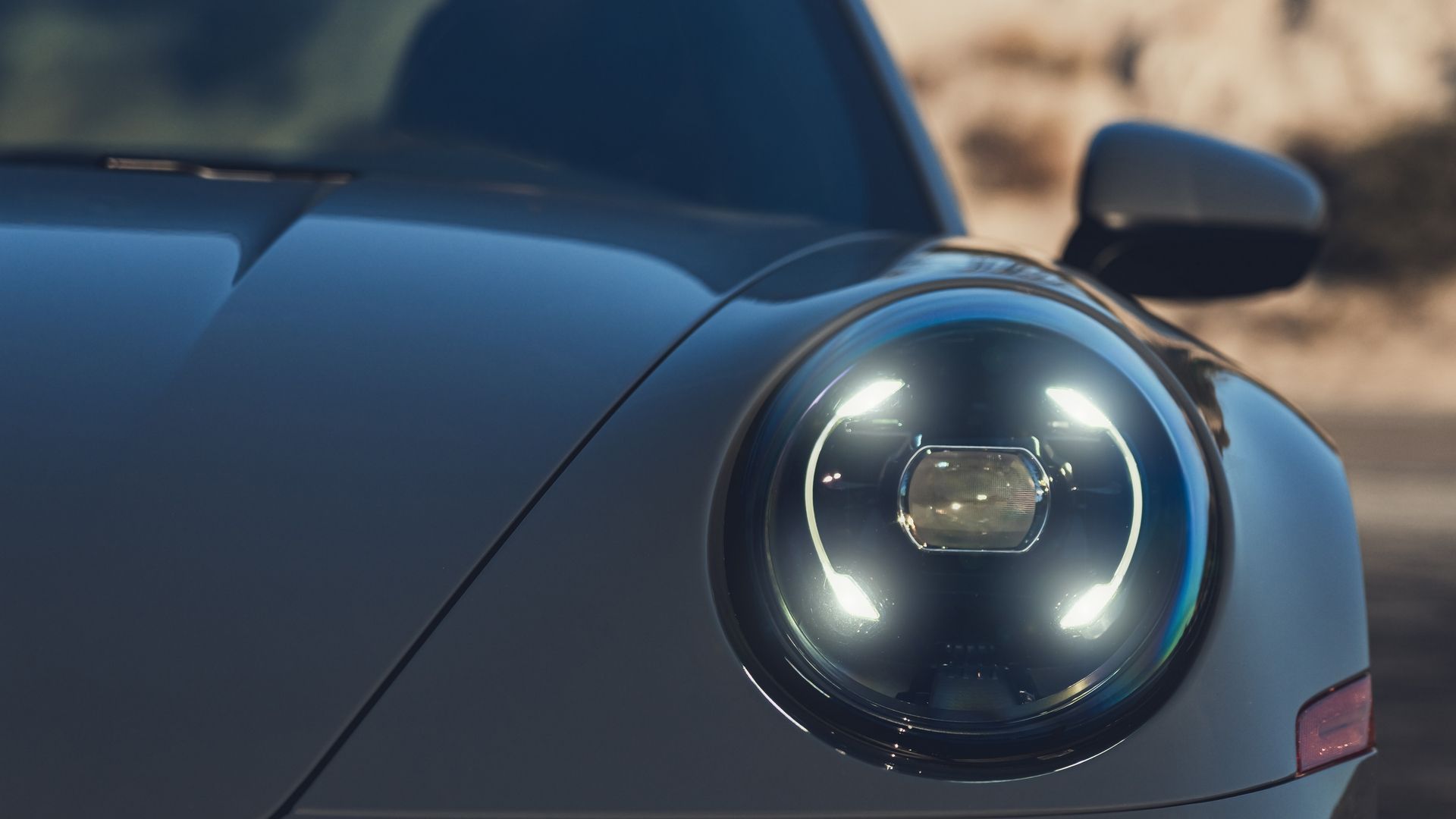
A hotly debated topic among car snobs across the globe is which sports car has the most timeless and recognizable silhouette ever designed? Ask 100 different people, and you will get 100 different answers. While the beauty and impact of any particular exterior design is subjective, is there a shape and style that transcends all doubt and deserves the title of the quintessential sports car design? Well, ChatGPT certainly thinks so.

- Divisions
-
Porsche design
- Founded
-
1931
- Founder
-
Ferdinand Porsche
- Headquarters
-
Stuttgart, Germany
- Current CEO
-
Oliver Blume
Thus, for the sake of our experiment, we have decided to ask the infamous AI bot what it thinks is the quintessential sports car design, so this beef can be settled once and for all (unlikely, but possible). As we put in the prompt and waited for the image generation, we wondered what the chatbot’s bias would be today. After we saw the result, we couldn’t say we were too surprised. Yet, we also asked the AI gospel more complex prompts to see how the answers would change. Here are the results!
To give you the most up-to-date and accurate information possible, the data used to compile this article was sourced from various manufacturers and other authoritative sources.
The Quintessential Sports Car Design (According to AI)

Love it or hate it, ChatGPT believes that the 982 generation Porsche Boxster/Cayman, aka the Porsche 718, defines the quintessential sports car design. Does ChatGPT have a blatant German bias, or did Porsche truly hit the nail on the head back in the late 1940s with the swooping shape of the Porsche 356, the predecessor to the iconic Porsche 911? Well, there is certainly merit to the idea of the Porsche mid-engine/rear-engine design motif being one of, if not the most recognizable, car designs.
Engine Layout Shapes Design

In automotive design, form tends to follow function, and there is no better example than the concept of the Porsche 911 silhouette. The Porsche 911 stands alone as the definitive rear-engine sports car, and Porsche has firmly established dominance in the most recognized application of this layout. So much so, most other automakers haven’t even considered dabbling with the rear-engine design (even when they were more adventurous and callous with spending).
Thus, for all intents and purposes, Porsche defines rear-engine design. The shape that comes as a result of the engine being in the back is part of the German brand’s intellectual property and marketing appeal, of which they take a firm claim. The overall design of the Porsche sports car hasn’t changed in 60+ years, because why would you sully perfection? Porsche’s brand image in the department is so strong that people still buy new 911 models because of this distinctive and recognizable design.
The Mid-Engine Battlefield

Contrary to Porsche’s firm dominance in the rear-engine layout, the mid-engine landscape is a sprawling battlefield filled with many strong competitors all fighting for the same top spot. In this space, automakers like Lamborghini and Ferrari will fight to the death, claiming they are the original pioneers of the mid-engine design, despite many others also wanting to lay claim. Because of the saturation of valid options within the mid-engine space, you understand why Porsche’s rear-engine design stands out.
Porsche effectively monopolized the rear-engine layout and, as a result, created unique branding so impactful that no other automaker’s efforts could ever reduce even a fraction of their market share. While even McLaren and Chevrolet fight alongside Porsche for mid-engine dominance nowadays, nothing can or will take away the instant visual recognition of Porsche’s original rear-engine design. ChatGPT may be right that the Porsche design is the most recognizable, but the 911’s rear-engine design has and will always look better and have more impact than the Cayman equivalent mid-engine style (hot take, but also not).
What Else Does ChatGPT Think About Design

We asked ChatGPT to generate another image using the prompt “quintessential sports car”. The second time was more interesting than the first, because this time it generated a unique sports car as opposed to a near-carbon copy of a pre-existing model. This red sports car is an interesting amalgamation of a Porsche 911 rear and something like a 2000s Ferrari front end with Porsche Carrera GT headlights. While an AI Frankstein car would normally induce shame and disapproval in most situations, we are surprised by how good this Porsche mock-up looks. No part of it looks that weird, and everything seems to work together. Bravo, AI, you’ve outdone yourself (this time).
ChatGPT’s Top Quintessential Picks

Once we saw a good result, we didn’t want to stop there, so we expanded our prompts to see what else ChatGPT thinks defines sports car design. First, we added “classic” to our pre-existing prompt, and it spat out a perfect little 1960s air-cooled Porsche 911.
AI Takes A Trip To Italy For Some Flavor

Then we added “modern” and got what is effectively a carbon copy of a Ferrari F8 Tributo. Did Ferrari pay off the AI to get this promo? Lamborghini might say so, but we’ll agree that a Ferrari (as long as it’s not an SUV) is almost unmistakable.
Porsche’s Dominance With Anything German-Related

Next, we added “German” and got a perfect replica of a 992 Porsche 911, yet another victory for the Porsche design as the staple. Although it’s not that serious, BMW, Audi, and Mercedes-Benz fans are still crying silently in the corner because they didn’t get an AI shoutout. Yet, you also now understand why Porsche still markets its products with the “Porsche: there is no substitute” slogan.
Japan’s Supercar Killer Has Strong Influence

Last, we added “Japanese” to the prompt, and the result was the 2017 model year facelift of the R35 Nissan GT-R. Why did the AI bot decide that the 2017 variant was the one to pick? Also, ChatGPT believes that the R35 GT-R is more recognizable than the R34 Skyline GT-R? How the supercomputer comes to these conclusions, we are unsure, because, unlike the text-based responses, the image generation doesn’t make the logic that was used to reach that determination accessible.
Other Honorable Mentions That Defined Automotive Design

We don’t like having a discussion about iconic sports car silhouettes without mentioning the Ford GT40 MKII. Aside from its racing prowess, its almost inconceivable roof height and impeccable aerodynamic sculpting helped shape a golden era of automotive design. The American race car was so successful that its impact on design was immediate across the entire landscape.
Lambo Brings About The Age Of Supercars

One of its successors, the Lamborghini Miura, followed the GT40’s blueprint, but shaped its function more for the road than the racetrack, and, in the process, created the world’s first true “supercar”. With this exotic Italian flex, the Miura would solidify the mid-engine layout as the go-to foundation for most designers following the layout’s popularity spike in the 1960s.
Jaguar Opens The Door To Small Sportsters

Around the same era, we were also introduced to the Jaguar E-Type, which is famously quoted as “the most beautiful car in the world” by Enzo Ferrari. Without cars like the E-Type, there would never have been eventual successors like the Mazda MX-5 Miata (thank you, Jaguar). The British sports coupe has produced some of the most impactful designs, yet since the end of the Jaguar F-Type, this category has been underrepresented.
German-Cool Has Never Been Cooler

Another pivotal sports car sorely left out of ChatGPT’s consciousness is the Mercedes-Benz 300 SL. While this classic titan of automotive influence may be rarer than a pot of gold at the end of the rainbow, its impact on automotive design cannot be understated. Few cars are as effortlessly cool as the Mercedes “Gullwing” Coupe and Roadster; the trick doors are the cherry on top.
Sports Car Icon Through The Ages

Last but not least, we also have to mention the most iconic BMW ever made, the E30 M3. Although the silhouette of a BMW E30 3-Series may not be as instantly recognizable as that of a Porsche 911, you can easily argue that the BMW E30 has the more memorable front fascia. The four circular headlights with the central kidney grills are still a core BMW design element, although the BMW design team has been feeling more adventurous with that original template now than ever before.